How to Layer Clothes for Unpredictable Weather
You leave the house shivering and by mid-afternoon you're peeling off layers in the sun. Welcome to in-between weather season, where the forecast is basically a shrug emoji. The fix isn't a heavier coat or a prayer — it's building your outfit in layers you can actually adjust as the day shifts.
Why layering is the answer to unstable weather
The whole point of layering is flexibility. Instead of committing to one outfit for the whole day, you build something you can take apart piece by piece as the temperature climbs, and put back together when it drops again. A look that works at 7am in a chilly car should still work at 2pm walking to lunch in full sun — layers are what make that possible without a wardrobe change.
The 3-layer logic: base, mid, and outer
Think of it like a system, not just an outfit. The base layer sits right against your skin and should feel breathable, not clingy or sweaty. The mid layer is your warmth and shape — this is where a sweater, cardigan, or vest adds the bulk that actually traps heat. The outer layer is your shield against wind, drizzle, or that early-morning chill, and it's usually the first thing to come off once the sun's out. Once you start thinking in these three roles instead of just "shirt, sweater, jacket," it's a lot easier to swap pieces in and out without the whole outfit falling apart.
Fabrics that actually layer well
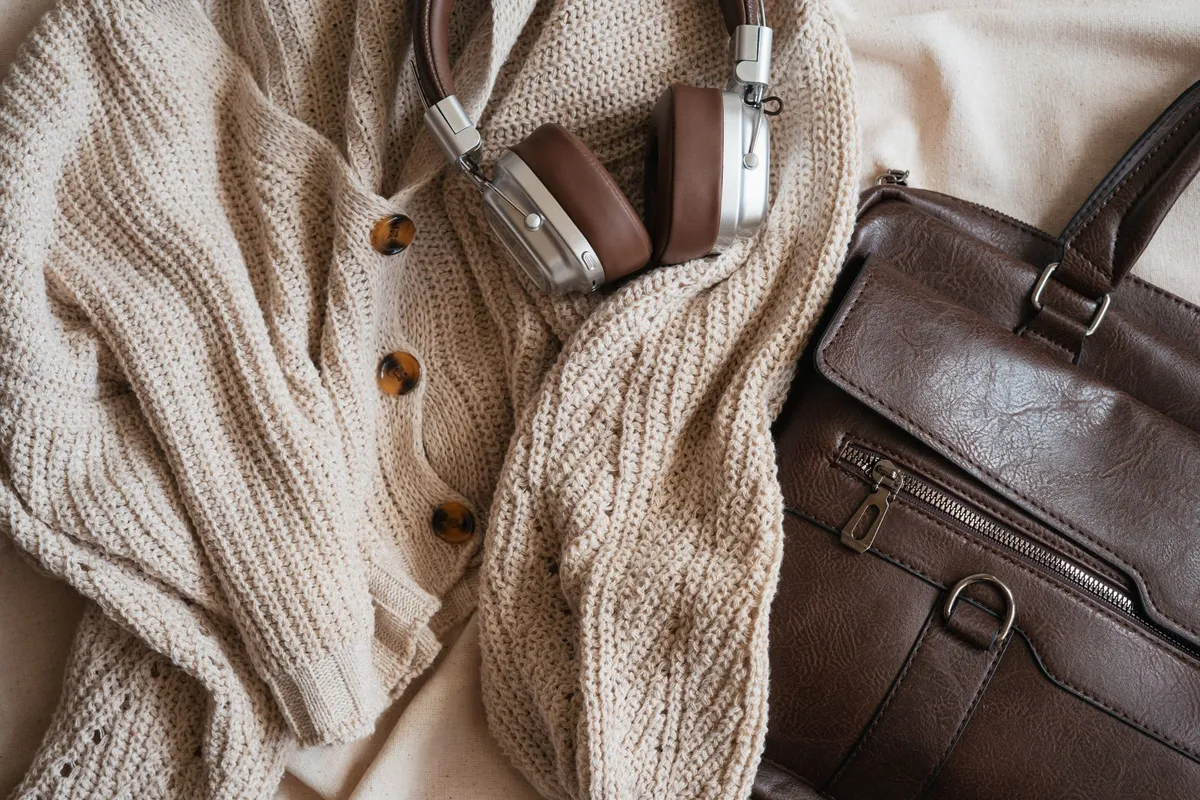
Not every fabric wants to be layered, and this is where a lot of outfits go wrong. For your base, stick to lightweight cotton or a soft viscose blend — something that breathes and doesn't bunch up under other pieces. For the middle, a fine-knit sweater or cardigan adds warmth without adding bulk, which matters more than you'd think once you're wearing three pieces at once. For the outer layer, lightweight twill or a thin nylon jacket blocks wind without trapping heat the way a heavier coat does. The goal across all three is thin and breathable over thick and warm — you get more flexibility that way, and you're not sweating through your base layer by 11am.
How to layer without looking bulky
The biggest layering mistake is treating every piece like it needs the same amount of room. If your base layer is loose, your mid layer is loose, and your outer layer is loose, you end up looking like you're wearing a sleeping bag. Instead, play with proportions — a fitted base under a slightly oversized cardigan, or a boxy jacket over a more tailored top underneath. Try to define your waist somewhere in the mix, whether that's a fitted base layer, a belt on your outer piece, or simply tucking in one layer and letting the rest fall loose. That one move does more to keep an outfit looking put-together than almost anything else.
Transitional pieces worth keeping on rotation
A few pieces are basically designed for this kind of weather. A denim jacket is the obvious one — it layers over almost anything and looks intentional whether it's buttoned up or hanging open. A fine-knit cardigan is just as useful, since it can go over a tank in the morning and get tied around your waist by afternoon. And a lightweight button-down shirt, worn open over a tee or buttoned on its own, works as either a base or a light outer layer depending on how the day's going. Keep these three in heavy rotation during shoulder season — they're doing more work than anything else in your closet.
Taking a morning outfit into an afternoon one
The real test of a good layered outfit is whether it survives the temperature swing without you having to go home and change. Start by losing the outer layer first — jacket off, tied around your waist or draped over your bag. If it's still warm after that, the next layer to go is usually a button-down or light cardigan, leaving you in just your base. The trick is making sure every layer underneath still looks finished on its own, not like something you were hiding. That's really the whole strategy: dress for the coldest part of your day, then plan your removals for the warmest part of it.
Common layering mistakes to avoid
A few things will sabotage even a well-planned layered outfit. Mixing pieces with wildly different drapes — a stiff structured blazer over a flowy, silky top, for instance — tends to look accidental rather than styled. Going too heavy on any single layer defeats the purpose entirely, since you'll either overheat or end up carrying half your outfit by noon. And ignoring your color palette is an easy trap when you're juggling three or four pieces at once — stick to a cohesive color story (neutrals with one accent color is a safe bet) so the layers read as one outfit instead of three unrelated ones stacked on top of each other.
You may also like
Fashion
Kitten Heels Are Fall 2026's Breakout Shoe Trend: Budget-Friendly Ways to Get the Polished Look
Fashion
The Leggings Revival Is Back for Fall/Winter 2026: Budget Ways to Style the Runway Comeback
Fashion
The Glossy Trench Coat Trend Is Everywhere This Fall — Here's How to Get the Look Without the Designer Price Tag